

本站推荐电影
-
·Rajinikanth Receives Lifetime Honour At IFFI
·北京德比伤情!曾凡博能打,廖三宁情况转好,3将伤势较严重!
·霍尔木兹大消息,美方:昨晚约40艘油轮通过海峡,运出1600万桶原油!特朗普:那里现在就是美国领土!伊朗公布:过去一年武器装备产量翻番
·英伟达 GeForce Now 云游戏服务将支持 Steam 手柄和 Steam Machine
·从1万行到4000万行!Linux诞生35周年:代码翻了4000倍
·中国男篮拉练热身不敌美国NCAA球队
·刚刚:李芷萱、何杰夺冠!为何选择c类赛事阿尔山?
·若纳坦-塔确认约满离开药厂:已告知俱乐部,决定不会改变
·微软小兵的单曲“控制”MV上架B站,网易云音乐:女孩形象
·H200月租破10万仍抢不到!国产AI芯片卡在编码这道坎
·抚顺广播电视台举行第25个中国记者节庆祝活动
·外贸城市变局:东莞杀回前五,杭州挑战青岛?
·明珠公园新增一处童趣空间 点亮市民幸福生活
·在韩失联一中国留学生已遇害,嫌犯被抓获
·7月福州市区CPI同比上涨0.6%
本站推荐电视剧
-
·[绥中]县委常委会(扩大)会议召开
·创造历史!蒙古男篮绝杀日本
·摩尔线程公布万卡级集群训练成绩 称国产芯片可训出前沿模型
·新华社消息丨前7个月我国工业机器人产量同比增长28.5%
·退货率30%背后,AI眼镜该做减法了
·政声直达丨“京东号”电商集装箱班列首次开行
·2025年淘宝京东618活动最划算的购买时机集中在5月31日和6月18日当天
·河北保定市清苑区发现1名外省返回核酸初筛阳性人员_疫情_白团乡
·北京发布会:学校仍是疫情防控的重点
·午后直线拉升!A股两大板块涨停潮!微小盘股表现强劲
·晚霞似锦
·りくりゅう“奇跡の1枚”に隠れたもう1つの衝撃 「エグすぎて涙出た」「180度超えてる」進化止まらず
·离谱!北京一男子骑电动车没戴头盔,被交警拦下询问回答“我刚植完发”;交警:处警告或10元以上50元以下罚款
·国新办发布会|七个方面呈现2023年中国打击侵权假冒工作的措施与成效
·炒黄金竟然不如炒白术?一些药材已暴涨近十倍!
电影下载排行
-
·哥俩好:“以软补硬” 打造行业里的“驰名商标”
·中央气象台:台风“沙德尔”可能于27日至28日登陆闽浙
·公募基金行业错位竞争,中小机构探索差异化发展路径
·“デカグリル”採用のトヨタ「“5人乗り”スライドドア“ワゴンSUV”」に反響多数! 約200万円&「TOYOTA」文字ロゴ採用のカスタムモデル「ダンク」が話題に
·Token不够用了!AI时代最火“新生意”|WAIC观察
·'We Want to Save Lives': How Tory Cabinets Pushed NHS to the Wall, Disregarded Nation's Health
·新三板创新层公司美佳新材登龙虎榜:当日价格振幅达到58.00%
·“5児の父”「杉浦太陽」の愛車「“1000万円超え”トヨタ車」に反響止まず! 豪華ウッド内装の「7人乗り国産車」に「うらやましい生活」と憧れの声も! 人気ファミリーに寄せられた“熱視線”とは
·Paramvir Singh Cheema on Working With Kriti Sanon and Dhanush in Tere Ishk Mein
·“梅花”逼近,宁波已转移十万余人,多县市山洪灾害红色预警_台风_米/秒
·Birkenstock goes public on New York Stock Exchange
·From Energy to Security: Did Biden Get Everything He Wanted From Saudi Arabia?
·[속보] 네팔 홍수로 한국인 8명 연락두절, 10명 고립
·《Batman: Knightfall》第一部分现已上线供在线观看
·Germany's Foreign Office warns citizens against traveling to Iran
电视剧下载排行
-
·龙港区翠海社区海绵化改造工程启动
·Colorado court upholds Google keyword search warrant which led to arrests in fatal arson
·官方:河床与35岁前阿根廷国脚佩泽拉协商一致解约
·央行授权德意志银行担任法兰克福人民币清算行
·Chiranjeevi, Venkatesh Scenes a Major Highlight in Mana Shankara Vara Prasad Garu
·100架!国产大飞机C919再签新订单
·日本六千吨神盾驱逐舰顶着台风天强行出海,下一秒当场被台风制裁,虚怀论语,原创 日本六千吨神盾驱逐舰顶着台风天强行出海,下一秒当场被台风制裁
·巴黎奥运会乒乓球项目资格赛体系发布
·中央气象台:台风“沙德尔”或于27日至28日登陆闽浙沿海,闽桂粤湘等地有强降雨,局地特大暴雨
·飞翼96-78击败火焰锁定季后赛席位 李月汝替补出战1投1中贡献2分
·Australian prime minister announces China visit hours before leaving for US to meet Biden
·革命性“水电池”或将很快就能为美加州的13.5万户家庭供电
·Chinese artists eye overseas concert boom
·阳泉:把每一笔民生投资都变成老百姓家门口的“幸福增量”
·北京出台18条举措促餐饮和食品领域老字号传承发展
终极三国
-
发布时间:2026-08-26
疑犯追踪
16家企业与京内外16家职业院校签约 定向培养养老服务人才_我的网站

一 |
Chinese plush toys, new-energy vehicles and robots often grab global headlines. Beyond the spotlight, however, many unassuming Chinese exports are quietly making great gains in markets around the world.
Recently, 14,040 specific pathogen free (SPF) eggs, also known as "diamond eggs" and prized as a critical raw material for vaccine research, took off from Beijing Daxing International Airport and landed in Riyadh, Saudi Arabia.
In the first half of 2026 alone, exports of Beijing-produced SPF eggs topped 400,000 units, soaring 254 percent year-on-year. Their export value exceeded 3.8 million yuan ($563,364), up 166 percent year-on-year. Both figures already surpassed the full-year total for 2025, according to statistics from the Beijing customs.
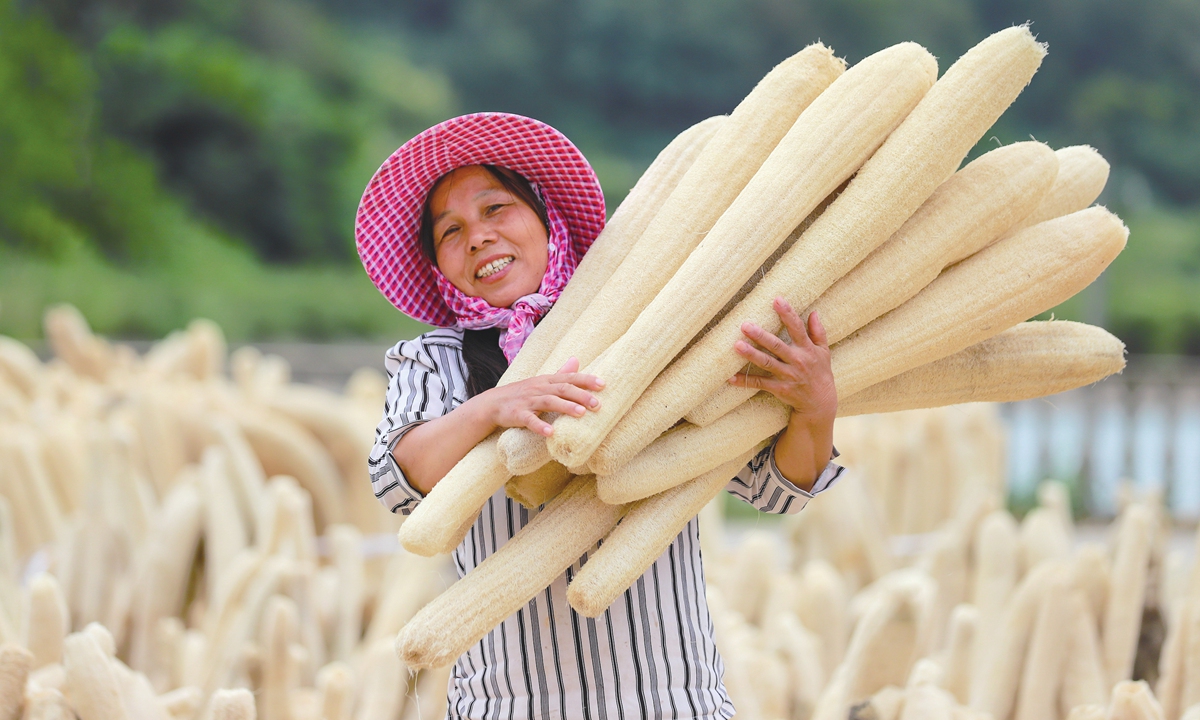
"Diamond eggs" are not alone. Many processed farm goods from various regions across China, ranging from loofahs to new corn-based synthetic fibers to "icy persimmons," are reaching consumers in many countries and regions around the world, with rising export volumes.
Behind the headline numbers lies a quiet change: China is no longer content to ship out raw apples, live fish, or unprocessed grain. It is climbing the value chain - turning farmyard staples into high-value, shelf-ready products for markets around the world, Zhu Qiucheng, CEO of Ningbo New Oriental Electric Industrial Development, told the Global Times.
New e-commerce stars
In Shangcheng County, Central China's Henan Province, the loofahs once lived a quiet life next to the stove - serving as kitchen scrubbers. Today they are a cross-border e-commerce star.
"We have built processing factories, design teams and unified procurement systems that link agricultural cooperatives and farmers across dozens of villages, turning sponge gourds - a traditional side crop - into a scalable, export-oriented industry," a sales manager at Yuangeng Longshang, a local producer and exporter of sponge gourd-related products, told the Global Times.
Processors in Shangcheng have developed more than 60 loofah product lines - ranging from bath sponges and kitchen scrubbers to pet toys and cultural-creative items - and sell them via Amazon, AliExpress, Temu and other platforms to more than 50 countries and regions, according to media reports.
In the first half of 2026, Shangcheng's e-commerce transaction volume of loofah-made products exceeded 30 million yuan, up 35 percent year-on-year. At present, the annual comprehensive output value of the loofah industry in the county has exceeded 100 million yuan.
Apart from sponge gourds, corn has also found a new way to become cloth.
"Unlike traditional synthetic fibers made from petroleum, the core ingredient of our flagship Sorona-based series comes from corn," Hong Boqi, general manager of Chuanyue New Material Co, a domestic cloth supplier, told the Global Times.
The process of making Sorona starts by fermenting corn sugars to extract Bio-PDO (a bio-based chemical building block, essentially a plant-derived version of the molecule used in certain plastics). This is then polymerized and spun into yarn and finished fabric.
The company has independently developed more than 300 Sorona fabric varieties, said Hong.
The firm is also exploring seaweed. Working with a domestic biotech partner, it created an "ice algae mud" functional fabric. Natural seaweed is finely ground and combined with a composite powder made from nephrite, then processed through a specialized spinning method. The finished textile is designed for recycling, reinforcing its green credentials.
Behind these advances lie years of patient research and development. Chuanyue invests about 4 million yuan annually in early-stage material development, covering the full journey from lab innovation to finished fabric, said Hong.
Innovative ways
Apart from being processed into industrial products, Chinese fresh fruits and vegetables are also processed in innovative ways to reach global consumers.
For example, Hainan Nicepal Industry Co is not simply selling fresh fruit. Instead, it uses advanced spray-drying technology to turn fresh fruits into fruit powders, concentrated juices, and not-from-concentrate (NFC) purees.
Pan Fengying, deputy general manager of the Hainan-based company, said that the company's output value reached 600 million yuan last year, and this year's target is 1.2 to 1.5 billion yuan, according to local media.
And in Yi County, North China's Hebei Province, fresh fruit that once spoiled quickly or fetched rock-bottom seasonal prices is now processed into "icy persimmons," which made exports easier.
In April 2026, the first batch of 15,000 persimmons was sent to Toronto, Canada. In the first half of this year, the sales volume of the ice-ripened persimmons in the county increased eightfold compared to the previous year; the annual production is expected to be 20 times that of last year, local authorities said.
Through controlled processes of de-astringency, sugaring and rapid freezing, the fruit develops a creamy, ice-cream-like texture while retaining its natural sweetness. Local authorities built a shared industrial park complete with standardized workshops, fully automatic production lines and large-scale intelligent cold storage, allowing micro- and small-sized firms to "move in without having to prepare for everything."
The China Agricultural Sector Development Report 2026, released in June, projected a pivot toward higher-value agricultural exports from 2026 to 2030. Categories such as processed fruits and nuts, frozen fruits, fish fillets and frozen vegetables are flagged for strong growth potential.
The message is clear: volume still matters, but value and differentiation matter more.
How did the "sudden" upgrade of the agricultural sector happen? Analysts pointed to two major reasons: pursuit of high-quality development and resilient supply chains.
China has emphasized high-quality development, guiding enterprises to focus more on quality over quantity. This has led to deep processing, brand building and new quality productive forces in the agriculture sector, said Zhu.
Zhu also noted that the speed and completeness of China's resilient supply chains are powering the transformation. Every link - from raw materials to finished goods, including processing, packaging, and logistics - is tightly connected.
。 北京晚报讯(记者王琪鹏)昨天(4月18日),北京市养老服务人才校企合作培养对接会在北京劳动保障职业学院举行,16家北京市养老服务企业与16家京内外职业院校签约,在养老服务人才定向培养、就业实训等方面达成战略合作。本次对接会期间还同步举办了春季校园双选会及线上春招会,发布岗位近3000个。 本次对接会由市民政局主办,旨在加深养老服务企业与职业院校之间的合作,共同培养出更多符合市场需求的养老服务人才。对接会吸引了来自京津冀以及内蒙古、辽宁、山东等地的20余家职业院校与40余家北京市养老服务企业参加。 对接会上,32家单位签订了战略合作协议。根据协议,北京市养老服务企业可根据实际需求,委托职业院校进行人才培养,职业院校可每年选派一定数量的学生,到北京市养老服务企业进行岗位实训。来自唐山职业技术学院的教师蒋丽洪介绍说,他们此次与海淀区四季青敬老院签订了合作协议。“以前我们的毕业生主要在唐山、秦皇岛等省内的养老机构就业,借助京津冀协同发展,我们的毕业生有了更多的发展选择。” 对接会期间,北京市养老服务人才春季校园双选会也同步举行。在北京康养集团的展位前,围满了前来求职、咨询的毕业生。据了解,北京康养集团计划招聘约370人,主要包括养老护理员、生活管家、社工、护士等岗位。

二 | 工作人员表示,前来咨询的毕业生大多在养老机构实习过,他们对养老服务行业更了解,求职的目标也更加明确。
Current article:http://hkm8p.zhouangnaoguangsundianzhenmou.cfd/news/20260826_94310.html
Published on:11:51:51
下载地址2:点击进入迅雷高速下载 温馨提示:邀请好友一起下,可提高下载速度,若遇无法下载,可另选时间尝试或重装软件!
下载方法:安装软件后,点击即可下载,谢谢大家支持,欢迎每天来!