中二病
央行重启买债,意味着什么?_我的网站

A | 本篇评级为★★★,主要围绕以下内容展开:
1、央行重启买债,意味着什么?关注新基建
2、军工和福建板块,机会还是风险?
3、黄金的回调要多久?
如有疑问请以音频内容为准,添加妙投小虎哥微信:miaotou515,入群有机会与董小姐进一步交流。
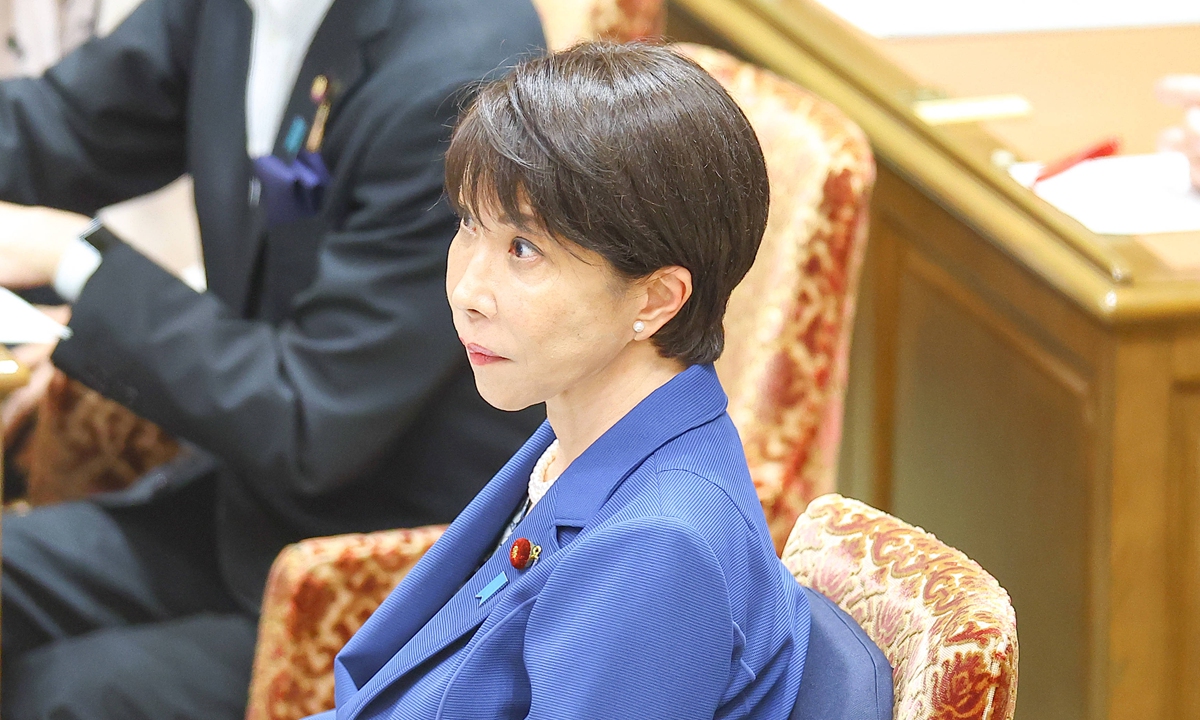
Japanese Prime Minister Sanae Takaichi attended the party leaders debate held at the House of Representatives in the Diet,. Tokyo Japan on July 15, 2026.
Due to concerns about fueling tension with China and South Korea, Japanese Prime Minister Sanae Takaichi is considering refraining from visiting the notorious Yasukuni Shrine, a symbol of Japanese militarism and wartime aggression, to mark the anniversary of Japan's unconditional surrender in World War II (WWII) on Saturday, Japanese media outlet Kyodo quoted sources familiar with the matter as saying on Wednesday.
Chinese experts said even if Takaichi forgoes a visit to the notorious shrine, the potential decision is merely driven by political calculations and diplomatic maneuvering, and could not be interpreted as a shift in her right-wing stance or as a sign of remorse over Japan's wartime aggression.
Such a visit to the shrine by Takaichi, a conservative known for her hawkish foreign policies, would certainly fuel tensions with China and create a rift in relations with South Korea, two countries that suffered under Japan's wartime military atrocities, Kyodo News reported.
Takaichi regularly visited the shrine before, even while serving as a Cabinet minister. But she has not visited the shrine since becoming leader of the ruling Liberal Democratic Party and prime minister in October, according to Kyodo news.
Chief Cabinet Secretary Minoru Kihara said at a press conference on August 7, when asked about a possible visit by Takaichi to the shrine around the anniversary, that "it is a matter for the prime minister to decide appropriately on her own," according to Japan's Jiji Press.
A source close to Takaichi told the Jiji that, "I don't think the prime minister will visit Yasukuni Shrine. It would complicate relations with South Korea."
Japan's Asahi TV reported that Takaichi may forgo the visit because she believes it is necessary to avoid triggering diplomatic tensions with South Korea, as well as with China.
A visit to the notorious shrine by a sitting Japanese prime minister would be a serious political incident, as it would reflect the leader's attitude toward Japan's wartime aggression and broader historical issues. Even if Takaichi chooses not to visit the shrine, it would not signal a retreat from her right-wing stance or a change in her views of Japan's wartime aggression against other countries, Lü Chao, an expert on Korean Peninsula issues at the Liaoning Academy of Social Sciences, told the Global Times. Rather, he said, the decision would largely reflect political calculations and diplomatic maneuvering.
Lü added that Takaichi could still make other symbolic gestures on the anniversary to cater to Japan's right-wing forces, whose support helped propel her to power. Such a move, he said, would underscore that her views of Japan's wartime history remain unchanged and serve as a reminder to neighboring Asian countries to remain vigilant about Japan's political direction.
Reporting on Takaichi's possible decision to forgo a visit to the shrine, South Korean newspaper Chosun Ilbo said on Wednesday that Takaichi had regularly visited the Yasukuni Shrine. "In the Liberal Democratic Party leadership election held in October last year, Takaichi also said that if appointed prime minister, she would visit the Yasukuni Shrine, noting that such visits should not become a diplomatic issue." However, since then, Takaichi has not visited in person and has only dedicated offerings in a private capacity, per the report.
In April, after Takaichi sent a ritual offering to the notorious Yasukuni Shrine, Chinese foreign ministry spokesperson Guo Jiakun said that China firmly opposes and strongly condemns Japan's latest negative moves related to Yasukuni Shrine and has lodged strong representations and protests with the Japanese side.
The Yasukuni Shrine is a spiritual tool and symbol of Japanese militarists responsible for the war of aggression. It is in fact a shrine for war criminals, noted Guo.
No sitting prime minister has gone to Yasukuni since Japan's late leader Shinzo Abe did so in 2013, drawing strong criticism from neighboring Asian countries.
Beyond Takaichi herself, some Japanese politicians and lawmakers have kept visiting the Yasukuni Shrine, triggering fierce pushback from peace advocates in Japan and the international community, Liu Jiangyong, a professor at the Institute of International Studies of Tsinghua University, told the Global Times, noting that such visits not only reflect the long-standing right-wing stance of Takaichi and other conservative politicians on historical issues, but also lay bare Japan's enduring militarist remnants.
Also in April, members of the conservative solidarity association, a group of conservatives in Japan's Liberal Democratic Party, and 166 Sanseito lawmakers from the Diet and local assemblies visited the Yasukuni war shrine.
In response, Lin Jian, Chinese foreign ministry spokesperson said that China strongly deplores and condemns such acts.
"By visiting the Yasukuni war shrine that honors Japanese Class-A war criminals year after year, these Japanese politicians seek to reverse the just verdict on Japanese aggression, and hereby whitewash Japan's war crimes and revive militarism. The Chinese people and people elsewhere who suffered under Japanese aggression will never accept that, neither will anyone in the world who stand for peace. As Japanese neo-militarism keeps gaining strength, the international community must stay on high alert and stand ready to stamp it out before it could wreak havoc in the region," said Lin.
。

B |
新闻解读评级说明:五星重磅,四星重要,三星级以下大家选择听。
1、央行重启买债,意味着什么?关注新基建
我们一起来看几条热点消息,同时也分析一下今天市场:几大指数微微下跌,有点扰乱大家心神。我们一起找找“定力”,看看随着10月底到来,到底是利好要出尽,还是我们正处于牛市的半途中。
新闻第一条来自央行。昨天央行透露将重启二级市场国债买卖,这会对债市、股市产生什么影响?立竿见影的效果就是:今天债券市场略微走牛,价格向上。央行所说的“重启二级市场国债买卖”,其实大概率就是“买国债”。

C | 这个动作已暂停了大半年。2025年年初时,由于国债市场过于火爆,大量机构资金扎堆,导致国债收益率被压得很低,价格被抬得很高。央行当时非常着急,出面喊话要给市场降温,担心过度抱团引发系统性风险。
但机构反应平淡,效果不佳,于是央行直接暂停了二级市场国债买卖,用实质动作给债市降温。经过大半年冷却,如今债市已恢复理性;而跷跷板的另一端——股市却火热起来。现在已不需要央妈额外压制债市,重新拿起这一传统工具,可以在二级市场买卖国债。
为何选在此时恢复?个人理解是为了配合年底财政发力。2025年即将结束,马上进入2026年,也就是“十五五”规划第一年。我国讲究“开门红”,许多重大项目、大资金要提前布局,这是政策常用做法。货币政策与财政此时同时发力,也就顺理成章。

D |
本文为妙投付费内容,上述仅为摘要,购买本专栏即可解锁完整内容。

E | 新用户可免费领本专栏7天阅读体验机会,在妙投APP-我的-权益兑换 输入“妙投888”即可领取。
Current article:http://hkm8p.zhouangnaoguangsundianzhenmou.cfd/news/20260826_704.html
Published on:10:25:12


